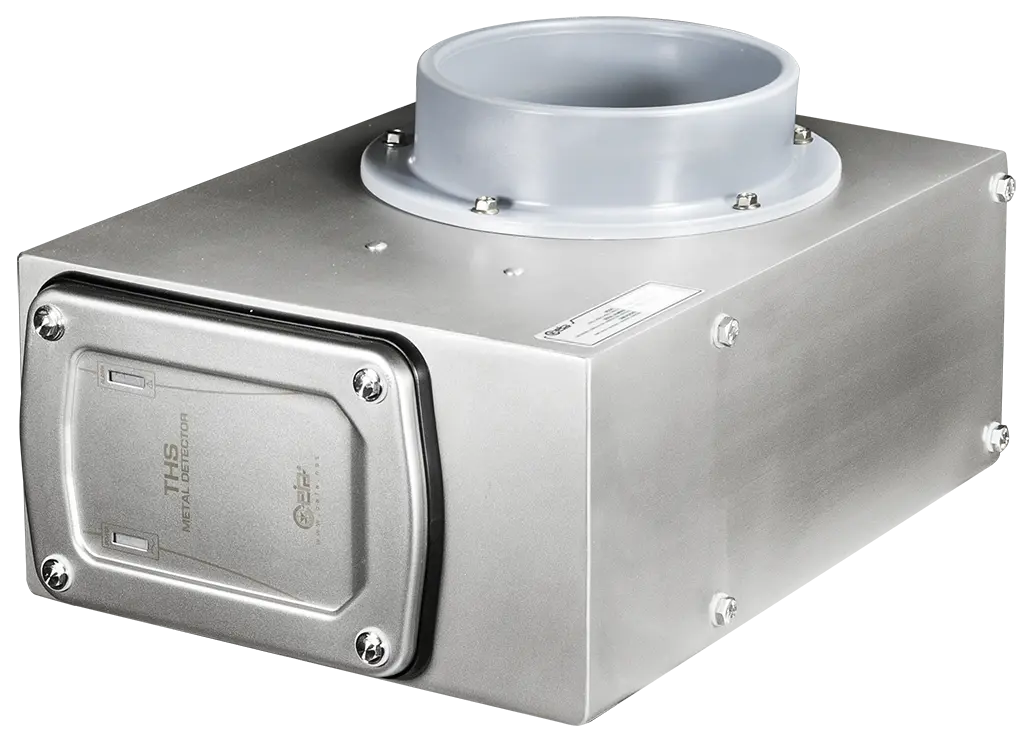
The highly integrable solution for the inspection of powders and granules. Thanks to digital signal analysis, it offers an exclusive detection capability for magnetic and non-magnetic metals, including stainless steel. Constructed from AISI 316L stainless steel, it withstands high-pressure washdown and ensures full compliance with FDA 21CFR Part 11 regulations. Its extreme speed allows it to divert contaminants without slowing down the production flow, ensuring maximum safety, integrity, and operational traceability.
- Home
- Dairy
Dairy
CEIA metal detectors ensure the highest food safety standards in milk, cheese, yogurt, and ice cream production. Thanks to the exclusive Multi-Spectrum Technology, THS systems eliminate the product effect caused by high moisture and salt, eliminating false alarms. With solutions for heavy washdown environments and integrated pipeline systems, CEIA protects consumers, optimizes production, and safeguards downstream machinery.

Detecting Metallic Contaminants in Dairy Processing
Maintaining the highest standards of product safety and quality is essential in modern dairy production. From cheese and yogurt to ice cream and other milk-based products, manufacturers must ensure that finished goods are completely free from physical contaminants. Among these risks, metallic contamination represents one of the most critical hazards. Metal fragments can originate from processing equipment, transport systems, pumps, mixers, or packaging machinery, making advanced detection technologies a key element in protecting consumers, ensuring compliance with food safety standards, and preserving brand reputation.
Sources of Metal Contamination
Industrial dairy production involves a wide range of mechanical and thermal processes, including mixing, pumping, pasteurization, homogenization, and filling. Over time, normal equipment wear in components such as pumps, valves, agitators, cutting tools, and conveying systems may lead to the release of small metal particles. Because these contaminants are often extremely small and not visible to the naked eye, reliable automated inspection systems are essential for identifying and removing affected products before they reach the market.
To ensure maximum product safety, inspection is typically carried out at strategic points along the production line, often after packaging, where the risk of secondary contamination is minimized. When metal contamination is detected, the system immediately activates an automatic rejection device that removes the affected product from the line. Alternatively, the line can be stopped to allow operators to safely remove the product in accordance with established quality control procedures.
Beyond product safety, metal detection systems also contribute to the protection of valuable production equipment. By identifying metallic fragments early in the process, manufacturers can prevent potential damage to sensitive downstream machinery such as homogenizers, pumps, filling systems, and packaging equipment. The result is improved operational reliability, reduced downtime, and greater overall production efficiency.

Challenges in Dairy Processing Environments
Detecting metal contaminants in dairy products presents specific technical challenges.
Milk and derivates typically contains high levels of moisture and salt, both of which can affect the sensitivity of detection equipment. Exclusively developed by CEIA, MULTI-SPECTRUM TECHNOLOGY (MS21 and MS210) is a unique metal detection technology that both optimises sensitivity to all metal contaminants and minimizes product effect in a very wide range of possible products.
In addition, product size, shape, and temperature variations may influence detection performance: thanks to CEIA exclusive BKG-A Autolearn function it’s possible to enrich previously acquired product characteristics with additional data to eliminate residual product effect and false alarms.
Industrial environments for dairy production are frequently subjected to intensive washing to allow proper sanitation: for this type of treatment, CEIA proposes the innovative MBH9 conveyor with THS/MS210 technology specifically designed for heavy washdown food-processing areas.
Periodic testing of the metal detector with certified test samples by operators is also an aspect that must be considered, due to the time required to perform this activity: CEIA AUTO-QC™ TEST provides a digital and effective calibration check along with a 0÷100% programmable reduction of the manual verifications, resulting in a corresponding reduction of labour cost, accidental product contamination and product waste.
CEIA also offers integrated inspection systems specifically engineered for the detection of metallic contaminants in products conveyed through pipelines (THS/PL series). These systems are designed for seamless integration with upstream and downstream equipment, particularly filling machines and clipping machines, ensuring continuous in-line inspection during the product transfer process. To facilitate installation across different processing configurations, the systems are available with a wide range of sanitary and industrial flange interfaces, enabling compatibility with various pipeline standards and connection requirements.