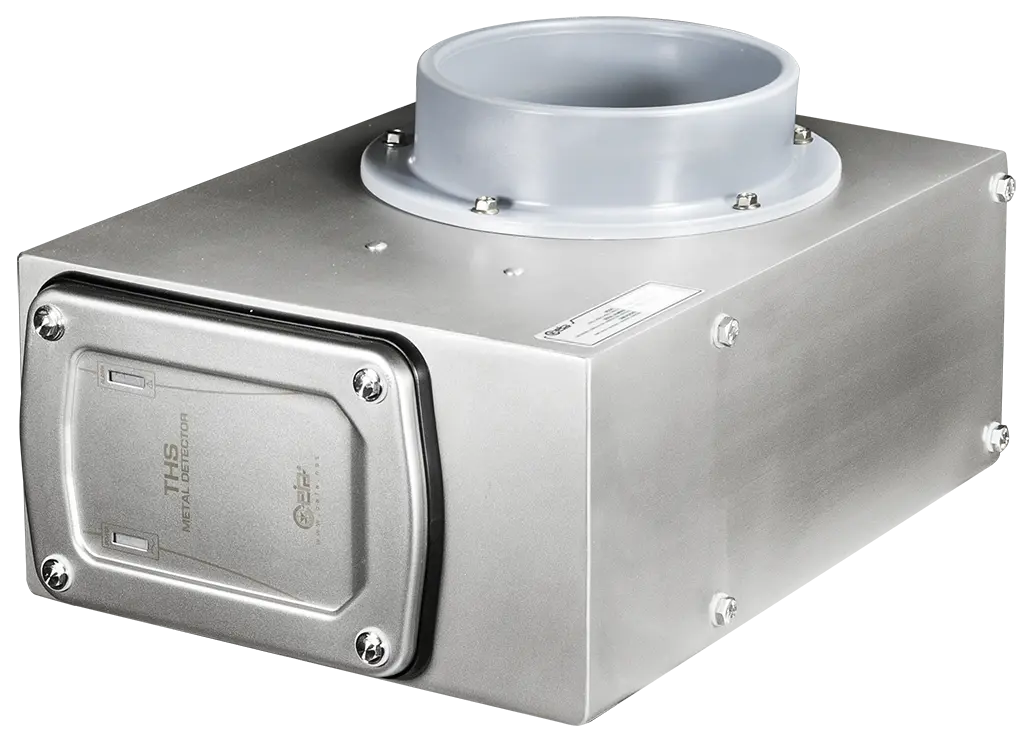
The highly integrable solution for the inspection of powders and granules. Thanks to digital signal analysis, it offers an exclusive detection capability for magnetic and non-magnetic metals, including stainless steel. Constructed from AISI 316L stainless steel, it withstands high-pressure washdown and ensures full compliance with FDA 21CFR Part 11 regulations. Its extreme speed allows it to divert contaminants without slowing down the production flow, ensuring maximum safety, integrity, and operational traceability.
- Home
- Ready Meals
Ready Meals
CEIA metal detectors guarantee maximum food safety in the production of fresh or frozen ready meals. Thanks to Multi-Spectrum Technology, THS systems cancel out the product effect of multi-component, wet, or salty meals, eliminating false alarms. Featuring conveyors built for heavy washdown environments and pipeline solutions for sauces and soups, CEIA ensures accurate inspection before final packaging.

Detecting Metallic Contaminants in Ready Meals Production
Ensuring the absence of physical contaminants is a fundamental requirement for food safety in ready meals production. From chilled and frozen dishes to fully cooked and packaged meals, manufacturers must guarantee that products are free from foreign bodies before reaching consumers. Among potential hazards, metallic contamination represents one of the most critical risks that must be effectively controlled. Metal fragments can originate from processing equipment, preparation tools, conveying systems, or packaging lines, making advanced detection technologies essential to protect consumers, ensure regulatory compliance, and safeguard brand reputation.
Sources of Metal Contamination
Ready meals production involves a wide variety of processes, including ingredient preparation, cutting, mixing, cooking, portioning, and packaging. Due to the complexity of these operations and the variety of ingredients involved, multiple potential contamination points may arise along the production line.
Over time, normal wear and tear of equipment such as cutters, mixers, conveyors, trays handling systems, and packaging machinery can lead to the release of small metal particles. Additionally, raw ingredients may introduce contaminants from upstream processing stages. As these fragments are often extremely small and difficult to detect visually—especially in multi-component meals—automated inspection systems are essential to identify and remove contaminated products before distribution.
Metal detection systems can be installed at different stages of the production process, depending on product type and packaging format.
Conveyor-based systems are widely used in ready meals applications, as products are typically transported horizontally in trays, containers, or sealed packages. These systems combine a metal detector with a conveyor belt and an automatic rejection device—such as a pusher, air blast, or retracting belt—to remove non-compliant products from the production flow. They are particularly effective when installed after packaging, ensuring that final products meet safety standards before reaching the market.
For liquid or semi-liquid components (such as sauces, soups, or purees), pipeline metal detection systems can be integrated directly into the process. These systems allow continuous inspection of the product flow without interrupting production, ensuring high sensitivity even in challenging conditions.
The choice of inspection solution depends on several factors, including product composition, packaging type (e.g., plastic trays, film-sealed containers), and required detection sensitivity. In many facilities, multiple inspection points are implemented to ensure comprehensive protection across the entire production process.
In addition to ensuring product safety, metal detection systems also help protect downstream equipment. Early identification of metallic contaminants prevents damage to sensitive machinery such as portioning systems, sealing units, and packaging equipment, ensuring operational continuity and reducing downtime.

Challenges in ready meals Processing Environments
Detecting metal contaminants in ready meals Processing Environments presents specific technical challenges.
Ready meals typically contain high levels of moisture and salt, both of which can affect the sensitivity of detection equipment. Exclusively developed by CEIA, MULTI-SPECTRUM TECHNOLOGY (MS21 and MS210) is a unique metal detection technology that both optimises sensitivity to all metal contaminants and minimizes product effect in a very wide range of possible products.
In addition, product size, shape, and temperature variations may influence detection performance: thanks to CEIA exclusive BKG-A Autolearn function it’s possible to enrich previously acquired product characteristics with additional data to eliminate residual product effect and false alarms.
Industrial environments for ready meals production are frequently subjected to intensive washing to allow proper sanitation: for this type of treatment, CEIA proposes the innovative MBH9 conveyor with THS/MS210 technology specifically designed for heavy washdown food-processing areas.
Periodic testing of the metal detector with certified test samples by operators is also an aspect that must be considered, due to the time required to perform this activity: CEIA AUTO-QC™ TEST provides a digital and effective calibration check along with a 0÷100% programmable reduction of the manual verifications, resulting in a corresponding reduction of labour cost, accidental product contamination and product waste.
CEIA also offers integrated inspection systems specifically engineered for the detection of metallic contaminants in products conveyed through pipelines (THS/PL series). These systems are designed for seamless integration with upstream and downstream equipment, particularly filling machines and clipping machines, ensuring continuous in-line inspection during the product transfer process. To facilitate installation across different processing configurations, the systems are available with a wide range of sanitary and industrial flange interfaces, enabling compatibility with various pipeline standards and connection requirements.